Natália Correia
Natália Correia
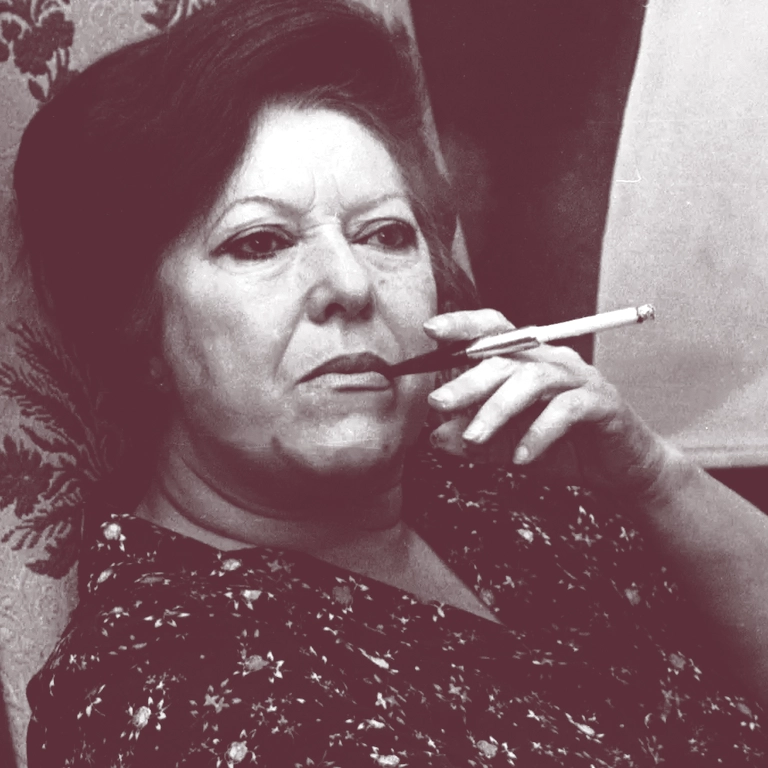
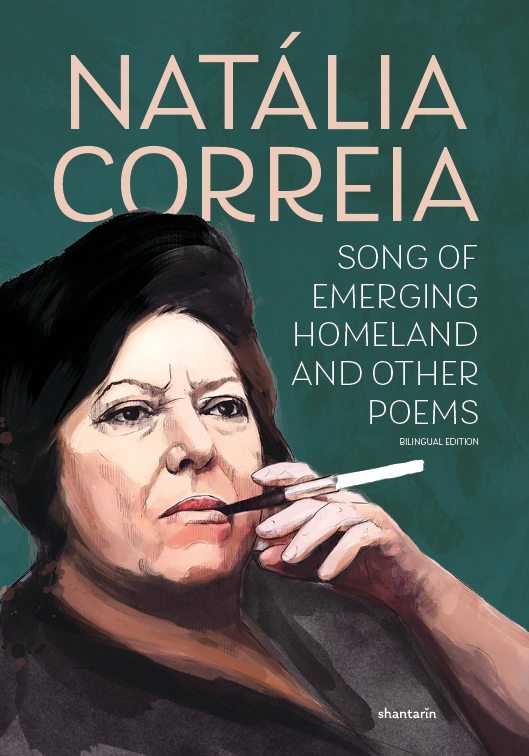
Natália Correia was born in the Azores in 1923 and moved to Lisbon in 1934, the city where she would live for the rest of her life. Her first book of poems, Rio de nuvens [River of Clouds], was published in 1947, just one year after the publication of her debut poem and her first children’s novel. In her public life, she was deeply engaged in political resistance against the Estado Novo regime, for which she was often censored, and even sentenced—though with a suspended sentence—to three years in prison for publishing her Antologia de poesia erótica e satírica [Anthology of Erotic and Satirical Poetry].
An emblematic figure of the 20th century in Portugal, honoured for her writing and decorated by the Republic, Natália Correia was more than merely a writer or a political figure: she was a cultural mediator. As a surrealist and neo-romantic author, she produced novels, poetry, plays, essays, and translations. As an editor, she founded Arcádia, the publishing house behind essential works of Portuguese feminism, such as the New Portuguese Letters (1972) by Maria Isabel Barreno, Maria Velho da Costa, and Maria Teresa Horta. As a journalist, she created landmark programmes for RTP (Portugal’s public service broadcasting organisation), including the series Mátria [Motherland], which played a key role in defending Portuguese women’s rights (the programme’s title was also that of a poetry collection she published in 1968). As a cultural agitator, she co-founded, with Isabel Meireles, Júlia Marenha, and Helena Roseta, the legendary Botequim bar, a central hub for Portuguese intellectual life in the 1970s and 1980s, particularly in the years during which a Portuguese democracy was rebuilt. Her political activism began with her joining the M.U.D. (Movimento de Unidade Democrática, or ‘Democratic Unity Movement’) in 1945, and continued with her public support for the presidential candidacies of General Norton de Matos (1949) and Humberto Delgado (1958). She came to prominence, politically, with her first election, in 1979, as a Member of Parliament in the Assembly of the Republic. She was re-elected in 1987 and served until 1991. She died in 1993.
You may find her poetry in…