Responsible Shantarin
Responsible Shantarin
☘︎ Green, not greenwash.
𖡼 Humane, first of all.
✔ Trust, the root we build upon.
These are the guiding principles of Shantarin’s commitment to environmental, social and governance responsibility.
Green, not greenwash
A Single-Use Plastic-Free Shantarin
At Shantarin, we are building, step by step, a publishing house free from single-use plastics across every stage of the production chain we are able to control. We do so, on the one hand, by guiding the printing houses we work with to supply books with zero plastic, through strict requirements set out in our technical specifications, and, on the other, by adapting our own day-to-day logistics practices.
What we already do
We began by eliminating a standard practice in the publishing sector: coating book covers with a plastic film. In our first three print runs in 2015, the covers were made of laminated coated paper. Since 2016, no Shantarin book cover has been laminated.

In that same year, this publishing house replaced traditional plastic adhesive tape with kraft paper tape. It is more expensive, but worth the effort. We have reduced plastic consumption and contributed to paper recycling. Only cardboard boxes and envelopes sealed with paper tape leave Shantarin for bookshops—and, more recently, for readers ordering from our online shop at shantarin.com. It saddens us when we receive returned books in cardboard boxes wrapped in layers of plastic tape. It takes time to separate the plastic from the paper, but we consider it a civic duty.
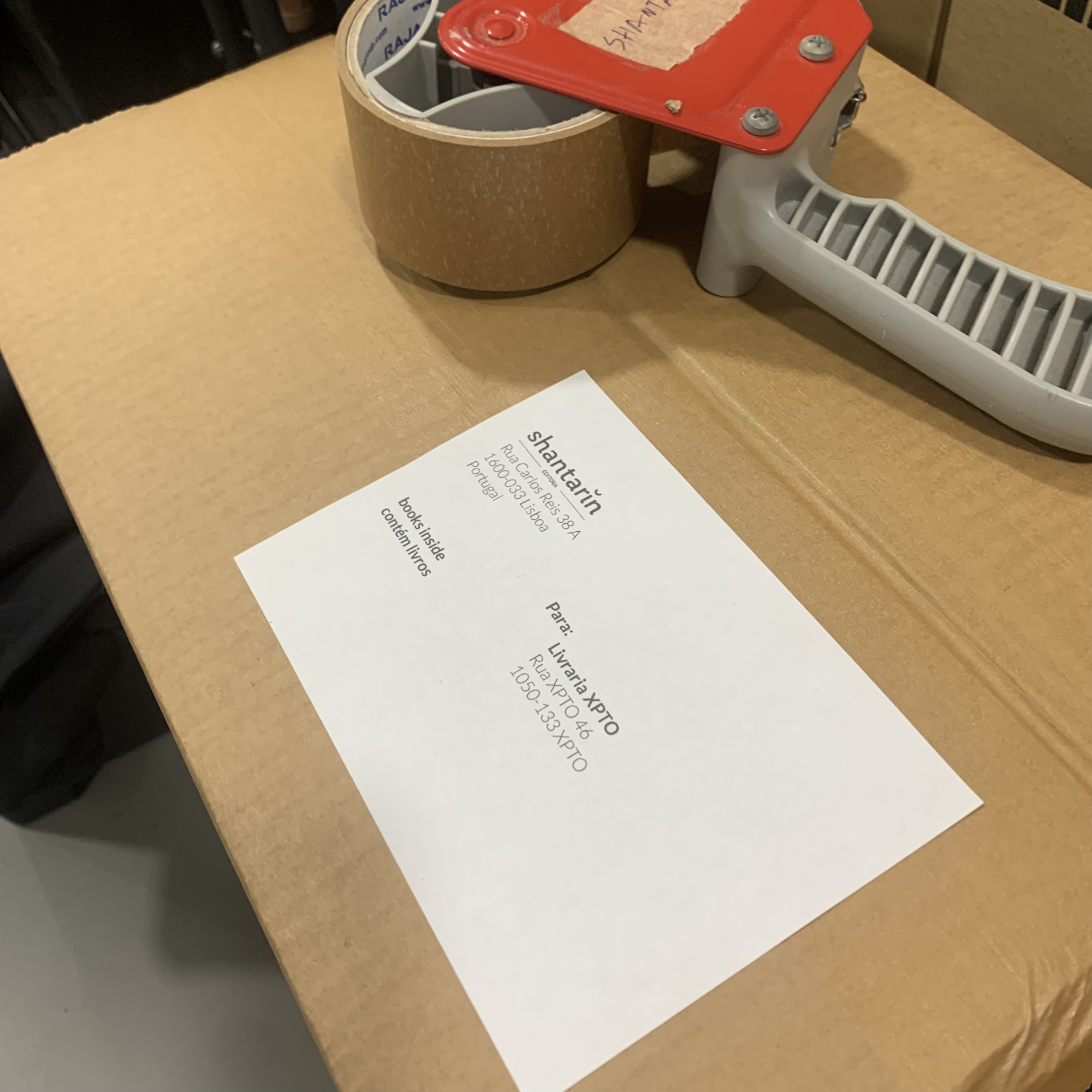
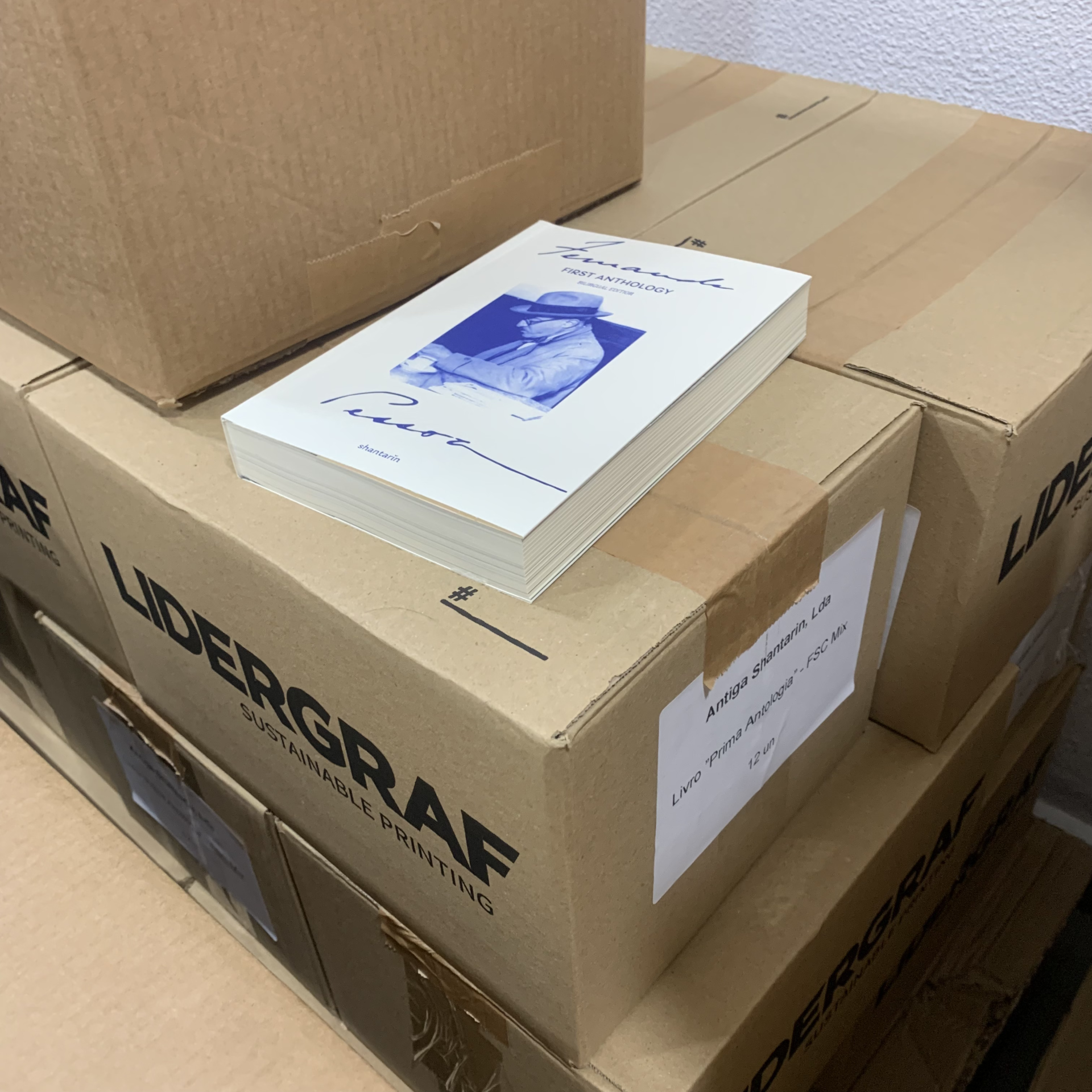
In 2022, we took another important step: our books stopped being shrink-wrapped by the printers. Hardback books began to be delivered loose, stacked on pallets wrapped in plastic film.
In 2024, we put an end to that film altogether. At our initiative, printing houses started supplying us with books packed in cardboard boxes strapped to pallets.
Since 2023, Shantarin has also provided its entire team with a water dispenser and reusable bottles, avoiding the use of single-use bottles. Non-reusable 5- or 6-litre water containers are used only occasionally, at book fairs. Even there, many of us prefer to bring chilled water from home in thermal bottles.
What still needs to be done
To make our book transport fully free from single-use plastic—from the printer to our commercial partners and readers—two tasks remain: replacing plastic pallet straps with straps made from plant-based fibres, and replacing plastic document sleeves with paper ones.
By 2026, Shantarin will also replace the reusable bottled-water system with mains water, installing a filtration system directly at the supply point.
Shantarin, Paper, and the Forest
What we already do
Shantarin was among the pioneers in this field in the Portuguese publishing sector—and not without cost, since it meant excluding certain lower-cost papers and printing services. From 2016 until the start of the pandemic in 2020, all Shantarin books were printed with environmental certification.
Environmental certification of books is now common practice across much of Western Europe—but not yet, unfortunately, in Portugal, where most publishing houses are slow to adopt it, despite the growing number of papers and printing companies certified, for instance, by FSC®, PEFC®, or the EU Ecolabel®.
Shantarin was among the pioneers in this field in the Portuguese publishing sector—and not without cost, since it meant excluding certain lower-cost papers and printing services. From 2016 until the start of the pandemic in 2020, all Shantarin books were printed with environmental certification.
At the end of 2022, this publishing house made a clear decision: to print all books under certification by the Forest Stewardship Council® (FSC®), thus ensuring compliance with the strict sustainability standards associated with the FSC label throughout the entire chain of custody—from forest management to paper production, distribution, and printing.
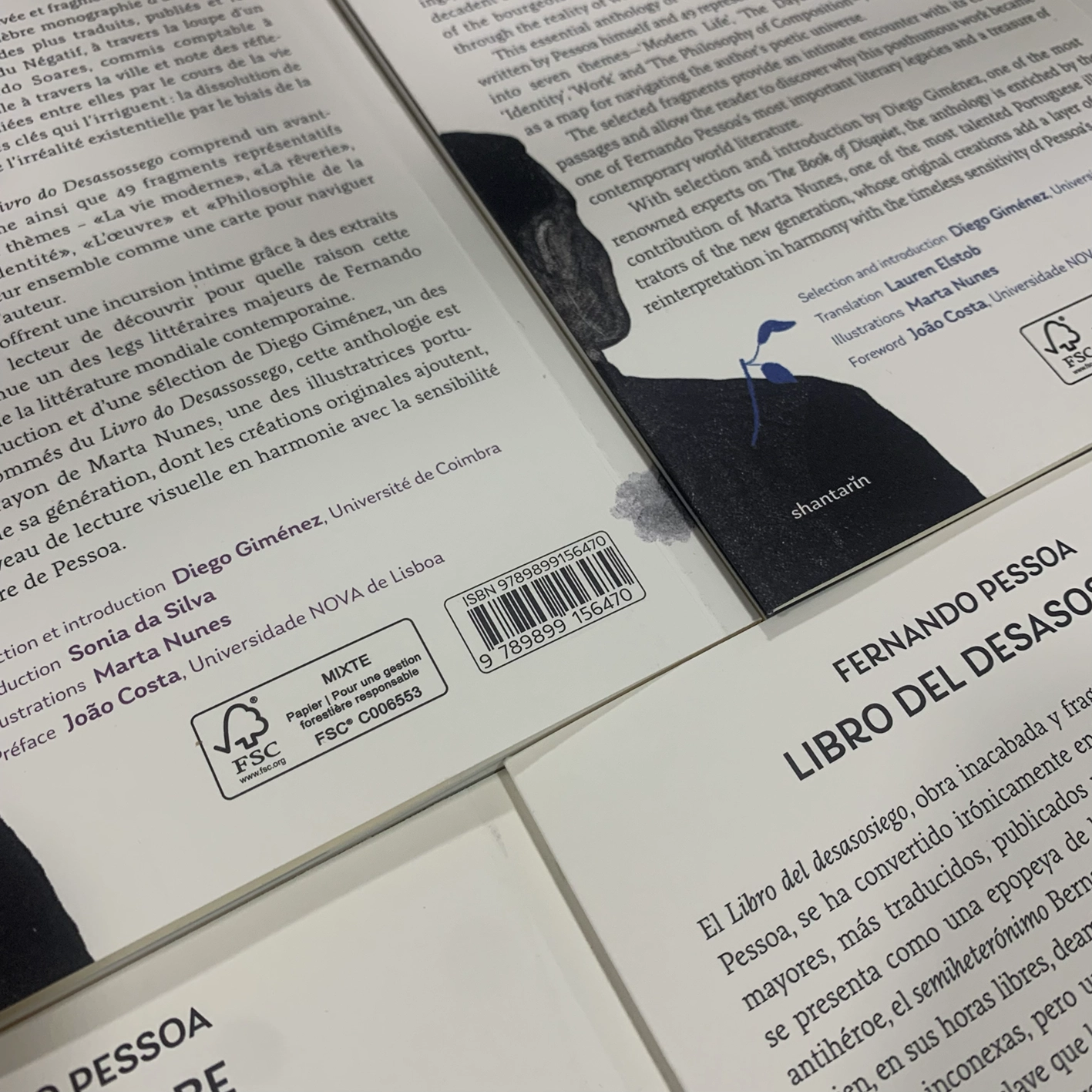
In June 2025, reaffirming its commitment to sustainable forestry, Shantarin became the first Portuguese company in the entire publishing and bookselling sector to obtain a promotional licence for the FSC trademark.
At our premises, we make every effort to minimise our activity’s impact on forests. All office paper purchased is FSC®-certified, and roughly half is recycled.
When it comes to paper use, we practise the three Rs daily: Reduce, Reuse, Recycle. We print only what is strictly necessary on our Epson EcoTank printer, with no disposable cartridges. Whenever possible, we print on both sides of each sheet, and single-sided sheets are reused later for drafts. Once they have served their editorial or administrative purpose, the pages go through our shredder; the paper strips are stored and reused as packing filler. With this small circular economy at home, we no longer need to buy any filler—plastic or paper—to protect books during storage and transport.
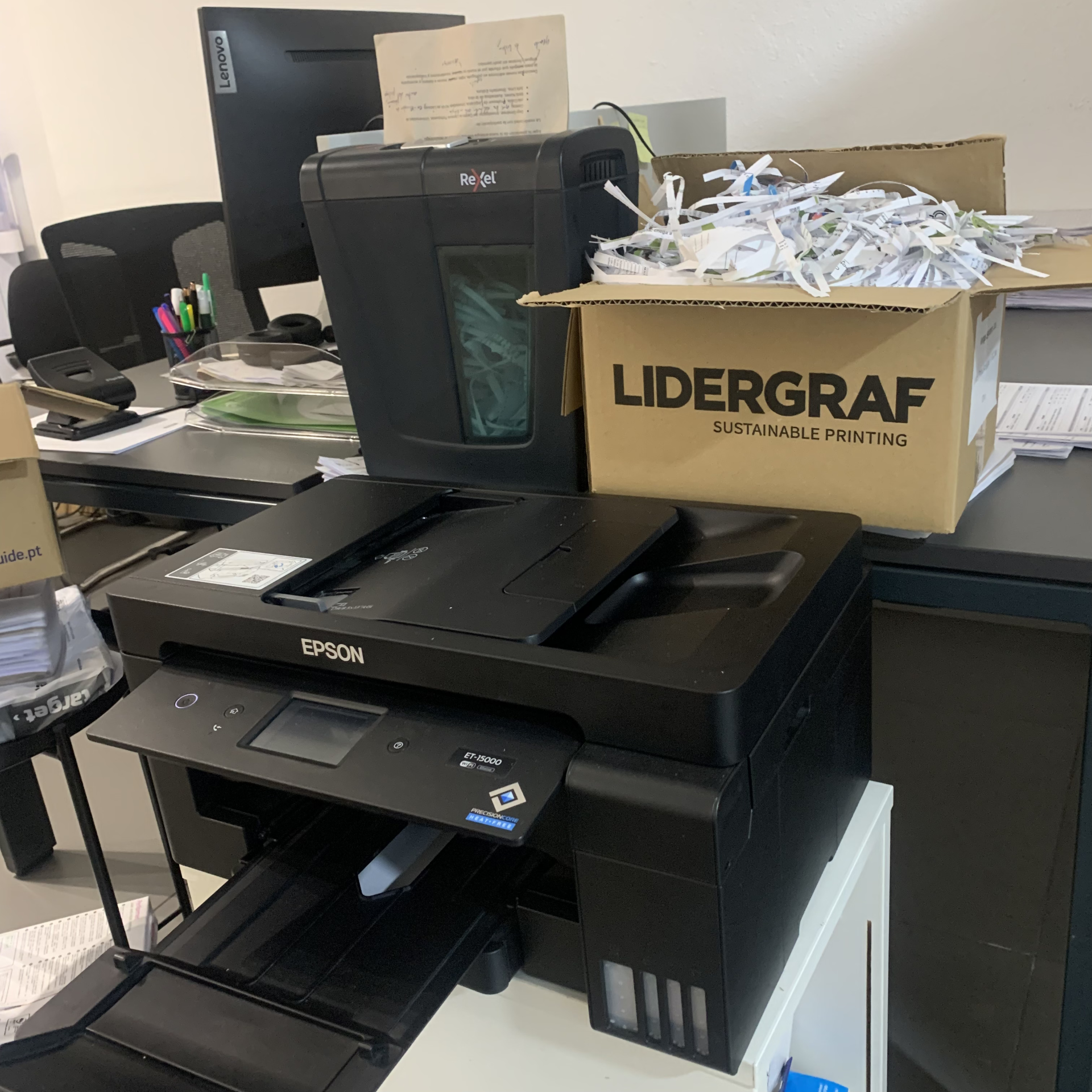
For book shipments, we purchase boxes made of recycled kraft cardboard. Yet a significant portion of the boxes we use are those in which printers deliver our books. Likewise, boxes returned to us by retail partners are reused for new deliveries. Even damaged boxes are dismantled and reused as protective filler.
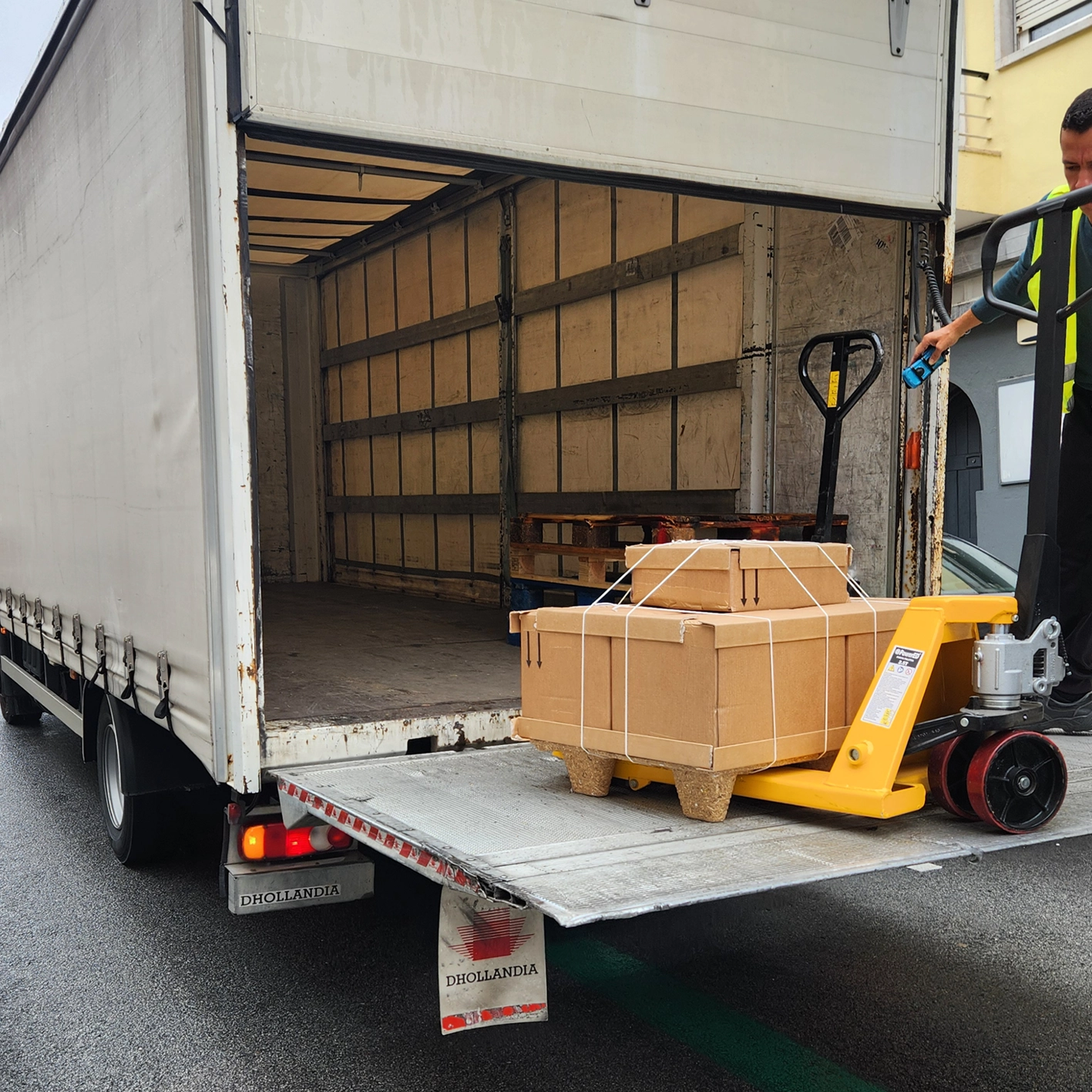
Since 2025, we have also been purchasing reusable wood-fibre pallets, produced from sawdust. They strike a fair balance between wooden pallets (sturdy but heavy) and paper pallets (light but easily damaged during handling or when exposed to moisture). These wood-fibre pallets are used by our printers to transport books to us, and later reused for storage or for bulk deliveries to distributors and retailers.
What still needs to be done
Despite the progress achieved, much remains to be done—and we will do it from 2026 onwards.
We must strengthen our investment in producing, promoting, and selling ebooks, and embrace audiobooks, offering readers digital alternatives to print. Audiobooks are particularly valuable for our history titles and for bilingual poetry editions, which lend themselves to language learning.
Given the multilingual nature of this publishing house, we must also establish a partnership with a global print-on-demand distributor, ensuring our print books are available worldwide—locally printed to avoid the ecological footprint of intercontinental shipping (books are, after all, heavy goods).
Finally, we must take responsibility for contributing to reforestation, giving back to nature what nature gives us. From 2026, we intend to donate €0.50 per book sold through our online shop (shantarin.com) to NGOs leading reforestation efforts. On top of that, we will contribute the amount needed to offset the number of trees used in our annual book production—our estimate is that one tree yields approximately 200 Shantarin books.
Last but not least, members of the Shantarin team who volunteer will roll up their sleeves and take part in at least two tree-planting activities per year. Our authors—including academics, translators, and illustrators—will be invited to join us.
The Shantarin Recycling Point
What we already do
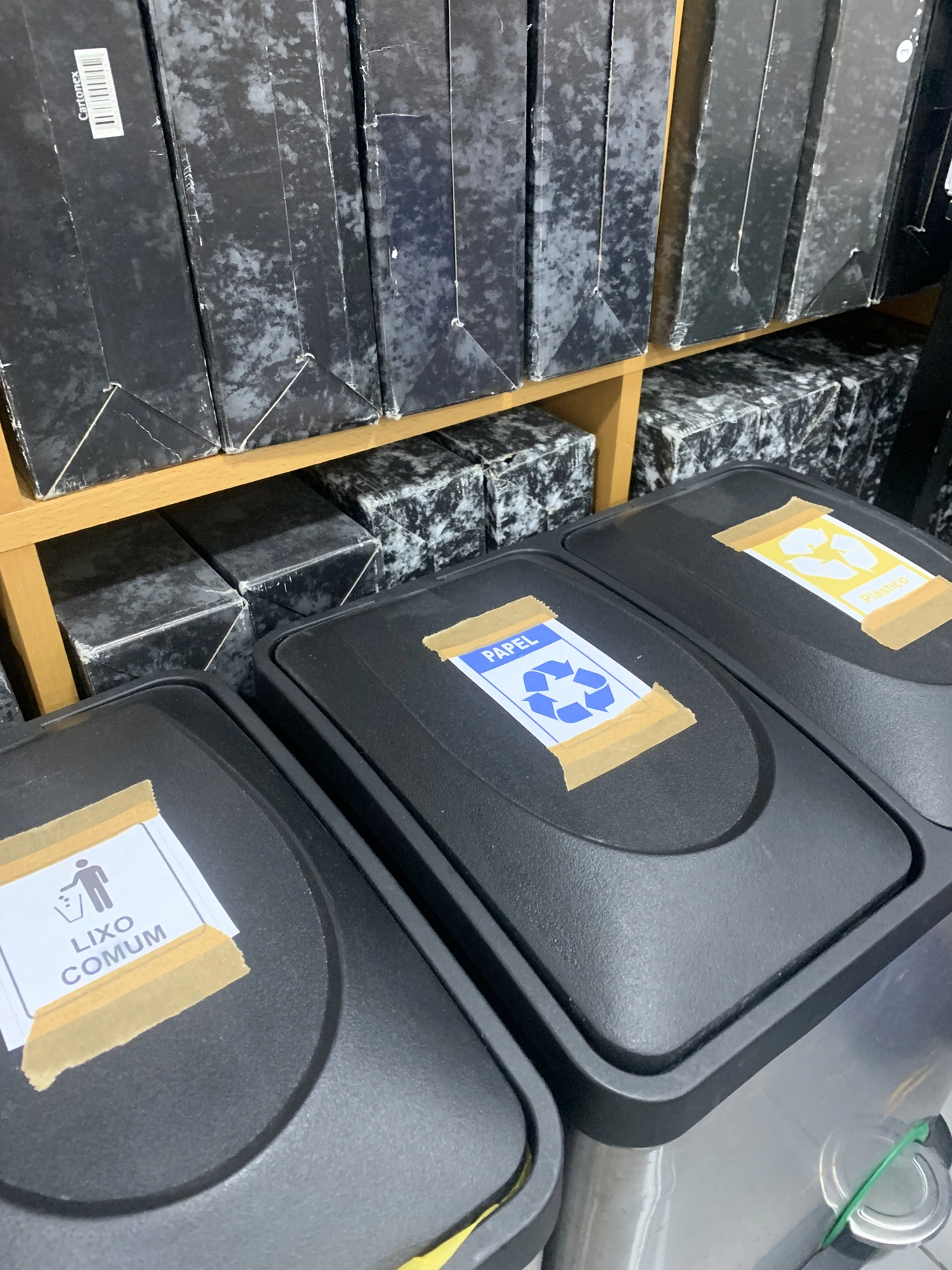
We have already mentioned paper recycling, but paper is not the only thing recycled at Shantarin. Staff bring groceries and supplies from home, the supermarket, or nearby shops. The publishing house’s recycling station is the final stop for packaging, non-reusable bags, and all office and warehouse materials that can no longer be reused. We pay special attention to used batteries, spent bulbs, and electrical and electronic waste, all of which are sent to dedicated collection points.
What still needs to be done
We still need to add organic waste collection to our recycling station—something we will implement from 2026.
Shantarin: Low-Voltage, Low-Carbon (and always on only at shantarin.com)
What we already do
At Shantarin, we try to save energy just as we do at home. All lighting is low-consumption LED. In winter, we prefer blankets and a space heater to air conditioning; in summer, we use fans.
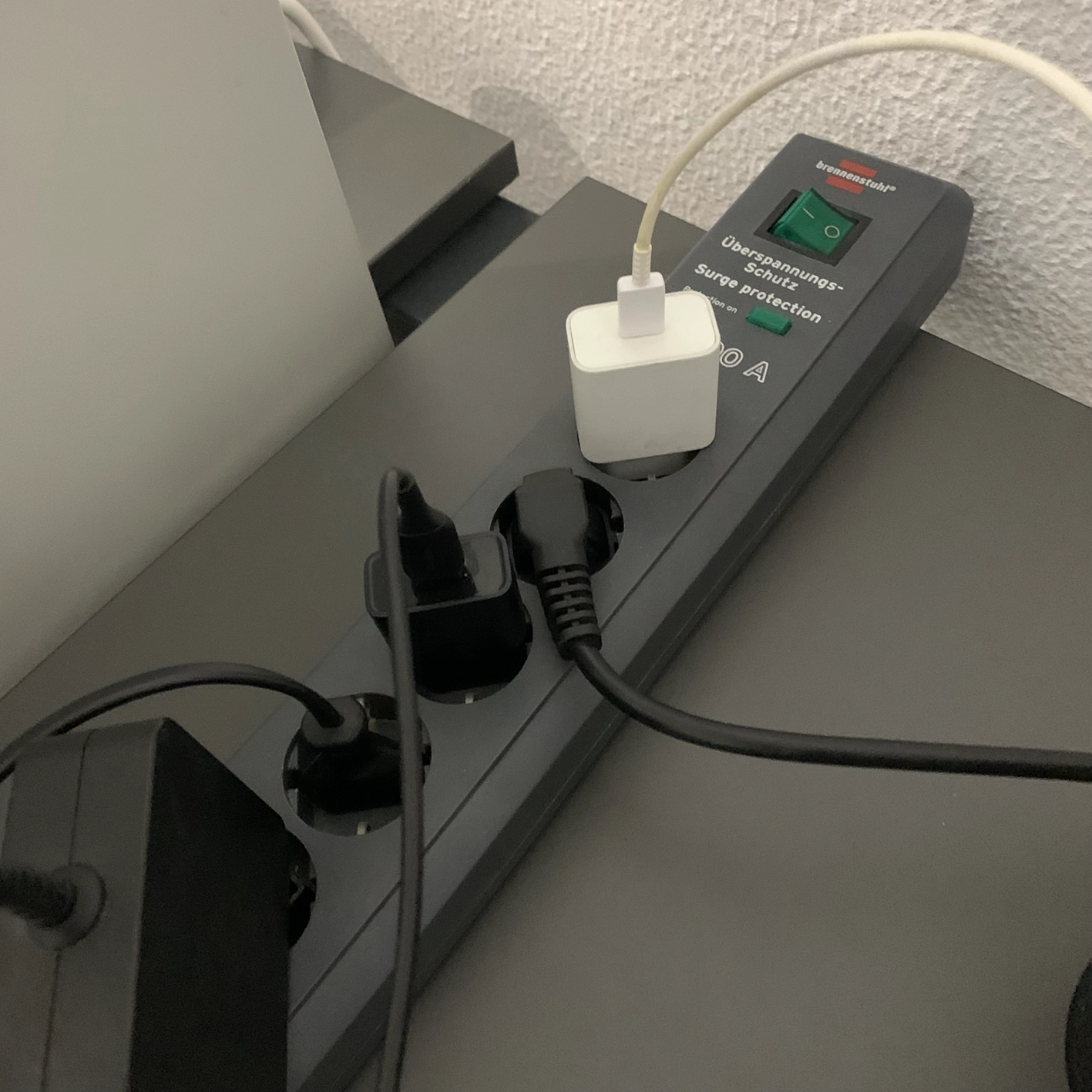
Electronic devices also deserve rest at night and on weekends—saving energy and extending battery life. We operate a zero-standby policy: at the end of each day, only two devices remain on—the mini-fridge and the alarm system. All lights and power strips feeding chargers, computers, and printers are turned off.
In the office, we mostly use cloud-based software as a service, such as Google Workspace (whose data centres run on 100% renewable electricity) and Moloni, our invoicing platform (developed by Visma, which follows a 'green coding' policy).
We have no company vehicles—and no intention of acquiring any, whether for people or goods. Every team member has a Navegante® Metropolitano (Lisbon region public-transport pass) paid by the company, for commuting and external work trips. We were among the first companies to join the Navegante® business programme for corporate mobility.

What still needs to be done
There is still progress to be made to lower our electrical load and further decarbonise our energy use.
At Shantarin’s new rented headquarters, where we moved in March 2025, the window frames are aluminium without thermal break and single-glazed. To reduce energy consumption for heating and cooling, by 2027 we will install A+-rated frames in PVC or thermally broken aluminium with double glazing.
We also inherited the previous owner’s electricity contract. In 2026, we will sign a new contract with a supplier guaranteeing that all electricity comes from renewable sources.
By 2027, we will review contracts with our main suppliers of goods and services, selecting carriers and other partners with clear environmental sustainability policies—including published sustainability strategies or reports, environmental certifications, zero- or low-carbon fleets, and energy-efficient production and logistics processes.
In the making...
Humane, first of all.
Trust, the root we build upon.
Lisboa, 9 November 2025