Fernanda Botelho
Fernanda Botelho
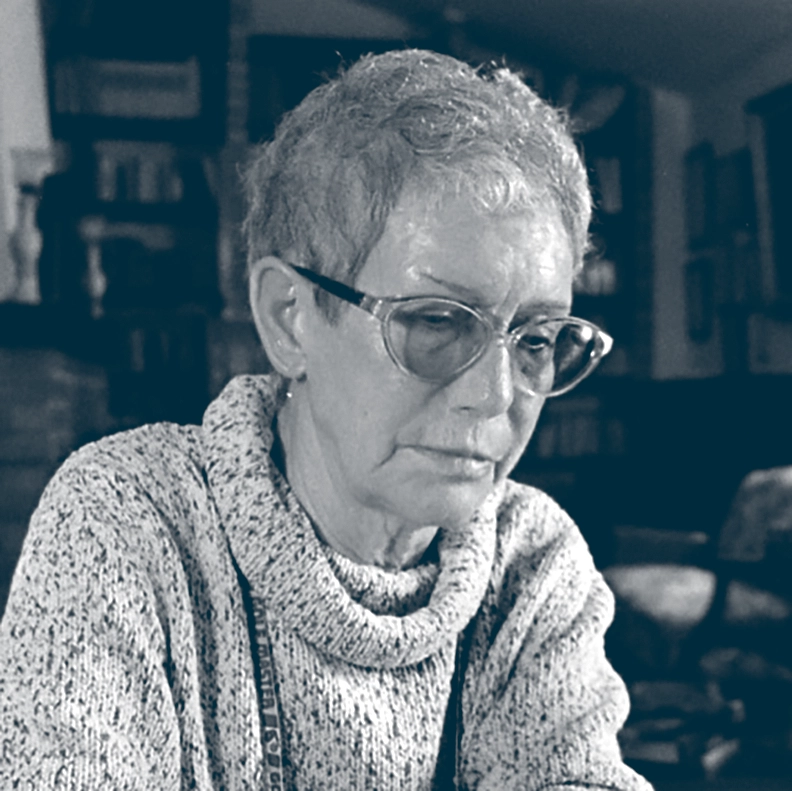
Native to Porto, Maria Fernanda Botelho de Faria (1926-2007) was the great-niece of writer Abel Botelho and a distant relative of Camilo Castelo Branco. After attending secondary school in Porto, she studied Classical Philology at Coimbra and later in Lisbon. There, in the capital, she met David Mourão-Ferreira, António Manuel Couto Viana and Luís de Macedo, with whom she co-directed the poetry journal Távola Redonda – Folhas de Poesia, where she also published her own debut poems. In the inaugural edition of Graal, the literary and artistic magazine, she would publish her short novel O enigma das sete alíneas [The Enigma of the Seven Paragraphs] (1956), while her first individual book publication would be the book of poems As coordenadas líricas [The Co-ordinated Lyrics] (1951).
By means of a questioning and non-conformist voice, allied to a unique technical command of narrative ranging over different processes and registers, interweaving genres and unfolding authorial masks, at the same time as revealing an incisive metaliterary consciousness, Fernanda Botelho’s work moves between her characters’ intimate universes and her portraits of society and entire generations. With a mixture of humour and human restlessness, tackling controversial themes such as adultery or homosexuality, Botelho depicts, without pulling any punches, the Portuguese landscape in which she lived and in which her questioning of the role of women is revealed to be crucial. Besides being a translator (her translation of Inferno, from Dante’s Divine Comedy, earned her the Medal awarded by the Directorate-General for Cultural Relations of the Italian Ministry of Foreign Affairs), Botelho worked as a literary critic at the literary journal Colóquio-Letras and at the education and scholarships bureau of the Calouste Gulbenkian Foundation, and equally at newspapers and other journals, having been an associate member of the Academia das Ciências de Lisboa (Classe de Letras) e da Academia Lusíada de Ciências, Letras e Artes (Brasil). She was honoured with some of the highest distinctions: the Order of Leopold I (Belgium); Order of Merit (Grand Officer rank) and the Silver Cross of the Spanish Group for the Advancement of Europe (Agrupación Española de Fomento Europeo). In 2013, as a posthumous tribute to the writer, the Lisbon City Council named a street—perpendicular to Estrada de Benfica—after her.
You may find her work in…