Luís de Camões
Luís de Camões
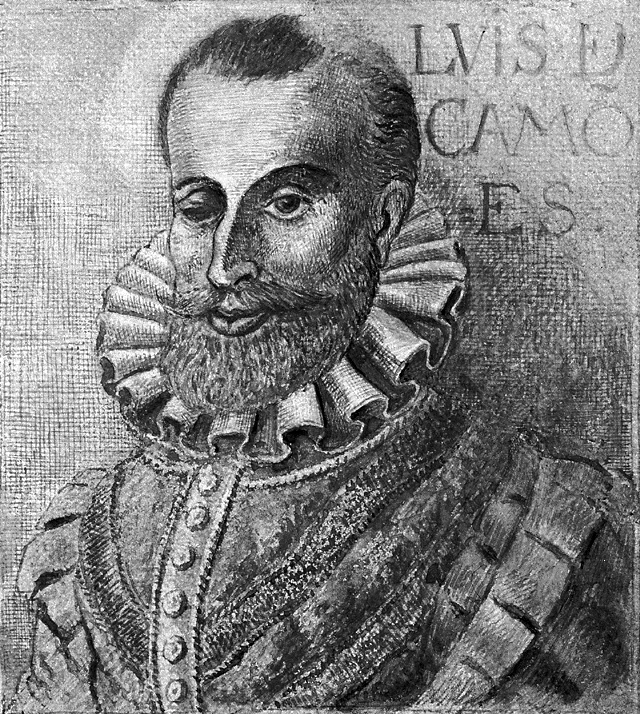
Luís de Camões was born in Lisbon, as best we can surmise, and is, by popular and critical consensus, considered to be Portugal’s national poet, an inculcation that evolved hand in hand, well after the poet’s death, with the evolution of the modern Portuguese nation state as a colonizing, and slave-trading country, and one that created an enduring empire stretching far beyond its tiny footprint on the southwestern tip of the European landmass. His poetry has always been a source of pride for the Portuguese people and an instrument of propaganda for their successive governments. Nevertheless, the poet’s accruing international importance, a process that continues to this day, and now sees him equal in stature to Renaissance peers like Shakespeare and Dante, has less to do with his status as Portugal’s poetic standard bearer, as it does with the miracle of his verse, whether epic or lyrical, and how Camões drew on his rich and erudite knowledge of classical sources and expressed his version of national history through supple use of the latest Italian Renaissance verse forms in Portuguese. It might be said that Camões provided the goods, namely in the form of his remarkable epic, The Lusiads, and the state (kings, queens, republicans, and dictators) did the rest. When the poet at last returned from the East (Africa, India, Macao, and Southeastern Asia) after nearly twenty years away, and after having almost lost his life, as well as the manuscript of The Lusiads in a shipwreck in the Mekong River Delta, he published his epic in Lisbon in 1572 to great acclaim and at the favor of his king Sebastian, who was still a teenager at the time. Teenagers—the age of the young King Sebastian—still read Camões today as part of the national curriculum. The poem traces, as the poet himself did in twenty years of restless wandering, the voyage and exploits of Vasco de Gama, and it does so in ottava rima. It is one of the world’s longest poems in that form amounting to 1,102 stanzas. Most of the selection below is taken from the remarkable lyrical poems, the sonnets in particular. These were first published in 1595, fifteen years after the death of Camões, who spent his last days in obscurity and poverty with the company of a single slave, Jau, whom he’d brought back with him from the Orient.
You may browse through his books here.